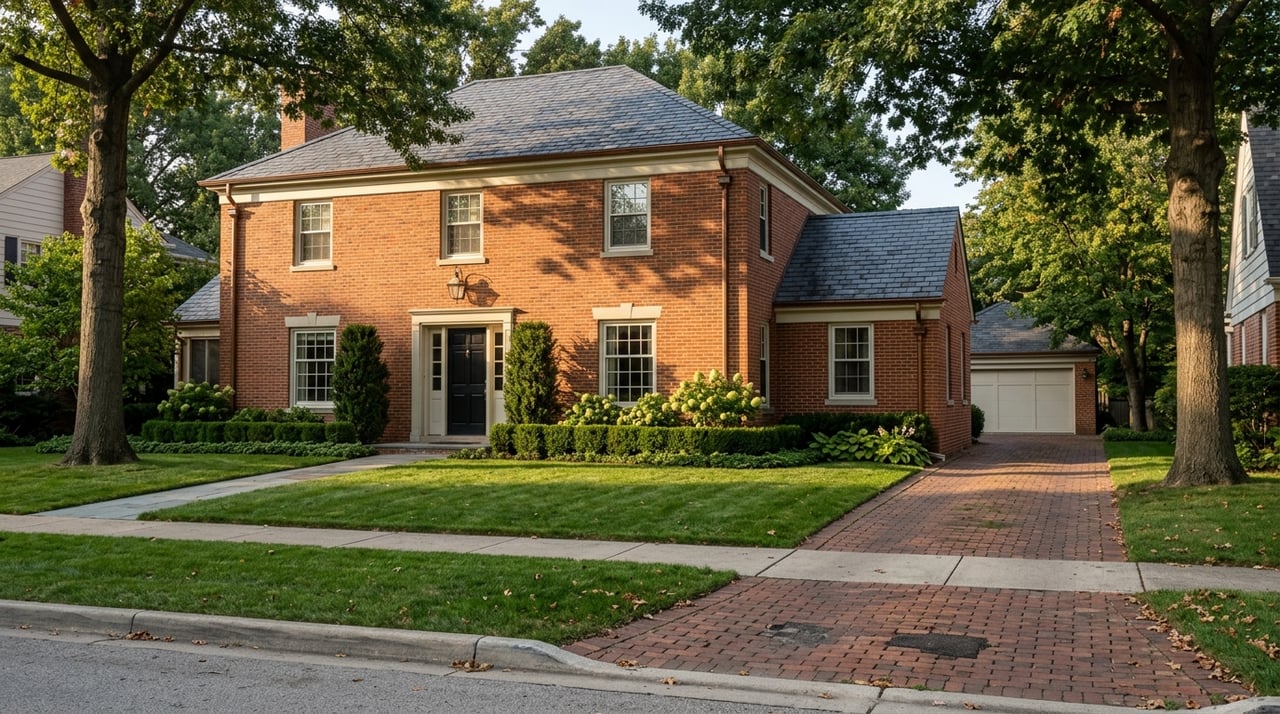
Looking at Hinsdale and wondering which neighborhood actually fits your day-to-day life? That question matters more here than many buyers expect. In a village where most housing is single-family, the biggest differences often come down to setting, home style, lot pattern, walkability, and how close you want to be to downtown or the train. This guide will help you compare Hinsdale’s Historic District, South Hinsdale, and other key pockets so you can focus your search with more confidence. Let’s dive in.
How Hinsdale Neighborhoods Differ
Hinsdale is still shaped mostly by single-family living. According to CMAP’s June 2026 community snapshot, 81.9% of housing units are single-family detached, with a median year built of 1981 and 15.8% of homes built before 1940.
That means your neighborhood choice is often less about whether you want a house versus a condo, and more about what kind of house setting you want. In Hinsdale, the biggest tradeoffs usually involve architectural character, preservation context, lot size, and access to downtown amenities or Metra.
The village also benefits from Metra’s BNSF line, with service at Hinsdale, West Hinsdale, and Highlands stations. For many buyers, that rail access becomes a major factor when narrowing down where to live.
Downtown Hinsdale Historic District
The Downtown Hinsdale Historic District is roughly bounded by Maple Street, Lincoln Street, Garfield Street, and Second Street. Village code states that this district was added to the National Register of Historic Places in 2006.
This area stands out as Hinsdale’s most walkable, train-oriented setting. The village’s downtown survey describes it as a compact, pedestrian-oriented commercial center that remains the heart of Hinsdale, where residents can walk, shop, sit at outdoor cafés, and run errands.
If you want quick access to daily conveniences, downtown is usually the clearest fit. The Metra tracks run through the middle of downtown, Burlington Park hosts the farmers market and seasonal events, and the surrounding housing mix includes late-19th- and early-20th-century homes along with some newer infill.
Buyers are often drawn here for the connection between home and lifestyle. If being able to walk to the station, local shops, parks, and restaurants matters most, downtown Hinsdale often rises to the top of the list.
What to expect downtown
Downtown Hinsdale tends to appeal to buyers who value convenience and character in the same place. You may find historic architectural influences such as Tudor-inspired and Colonial Revival homes, along with newer construction designed for an in-town location.
Because of the district setting, you should also be prepared for a more preservation-focused environment. That can be a real plus if you appreciate established streetscapes and historic identity.
Robbins Park Historic District
Robbins Park offers a different kind of historic experience. Village code defines the Robbins Park Historic District as roughly bounded by Chicago Avenue, 8th Street, County Line Road, and Garfield Street, and it was added to the National Register in 2008.
Compared with downtown, Robbins Park feels more residential. A village planning packet describes it as one of Hinsdale’s most historic and architecturally significant neighborhoods, rooted in the William Robbins Addition of 1866 and 1871, with a park-like setting shaped by landscape architect Horace Cleveland.
For many buyers, Robbins Park’s biggest draw is architectural variety. The village packet identifies styles including Gothic Revival, Italianate, Queen Anne, Colonial Revival, Prairie, Shingle, Tudor Revival, Craftsman, French Eclectic, and Italian Renaissance.
That variety gives Robbins Park a distinctive old Hinsdale feel. If you want a neighborhood where architecture and historical continuity are central to the setting, Robbins Park deserves a close look.
Why buyers consider Robbins Park
Robbins Park is often a strong match if you want historic character without living directly in the downtown retail core. It offers a more residential feel while still keeping you relatively close to Hinsdale’s central amenities.
This area may also appeal to buyers who enjoy homes with individual design personalities. Instead of a more uniform visual rhythm, you may see a broad mix of periods and styles from one block to the next.
South Hinsdale
South Hinsdale is best understood as the residential area south of the tracks around the original village core. Historically, this side of town has long been organized in relation to the railroad line, which still helps explain how many buyers experience the area today.
Homes in South Hinsdale often blend older character with practical flexibility. Many older homes dating to the late 1800s have been renovated, and larger lots are more likely on the eastern end between County Line Road and Garfield Street.
The architecture mix here includes Queen Anne, Georgian, Colonial Revival, and Tudor Revival styles. Newer construction is also often designed to reflect older forms, which helps maintain visual continuity across the neighborhood.
For buyers who want a middle-ground option, South Hinsdale can be especially appealing. It often offers historic character and established surroundings without placing you in the strictest historic-core blocks.
South Hinsdale lifestyle feel
South Hinsdale generally reads as more neighborhood-centered than downtown. Major local amenities include The Community House, Robbins Park, and Katherine Legge Memorial Park, and the area has sidewalks with walkability to Metra stops in its northern portion.
If you want some convenience but prefer a more residential pace, South Hinsdale may feel like the right balance. It is often a good fit for buyers who want continuity, charm, and a little more breathing room.
Highlands, Woodlands, and County Line Road
If your priorities lean toward space and privacy, the estate-style pockets east of County Line Road deserve attention. This geography is concentrated on the Cook County side of Hinsdale and is closely tied to the Highlands and Woodlands areas.
According to the Hinsdale Historical Society, the Woodlands is the southern portion of that larger area, while the Highlands forms the northern half. The Woodlands was platted in 1924 with landscape architect George W. Maher and promoted as a place shaped by natural beauty and artistic development.
Historical context helps explain why this part of Hinsdale still carries an estate-like identity. The Highlands grew from an 1892 subdivision, and examples such as the Freer estate at 505 South County Line Road, built in 1901 on about 50 acres, reflect the long-standing association with larger parcels and a more private residential setting.
For buyers, the main tradeoff is usually simple. These areas tend to offer more setbacks, more space, and a quieter feel, but less of the easy walkability found in downtown or the in-town historic neighborhoods.
Who these areas may suit
Highlands, Woodlands, and County Line Road often fit buyers looking for custom architecture and a larger-lot environment. If your ideal setting includes privacy and an estate feel, this pocket may be more aligned with your goals than the denser historic core.
If, on the other hand, you want to walk to cafés, parks, errands, or the station, you may prefer one of the more central neighborhoods. In Hinsdale, space and walkability often sit on opposite sides of the same decision.
Key Tradeoffs to Compare
When you compare Hinsdale neighborhoods, a few factors usually matter most.
Commute and station access
Metra BNSF access plays an important role across Hinsdale, but the best station fit depends on where you live. Downtown and Robbins Park are generally the clearest walk-to-station choices by location, while the east-side estate pockets are more naturally aligned with Highlands Station and the west or southwest side with West Hinsdale Station.
If commuting is part of your routine, it helps to think beyond the address itself. A neighborhood that looks ideal on paper may feel very different once you factor in your usual train access.
Walkability and daily convenience
Downtown is the strongest option for errands, dining, parks, and rail access on foot. South Hinsdale is more residential, but it still offers neighborhood-scale amenities and some station walkability depending on the block.
That distinction can shape your daily rhythm. If you want a more active, on-foot lifestyle, downtown may be the best fit. If you want a quieter neighborhood setting with selective convenience, South Hinsdale may make more sense.
Historic character and architecture
If you want the widest range of historic architecture and a strong preservation identity, Robbins Park is one of the most compelling areas to explore. Downtown also offers historic homes, but with a stronger commercial and pedestrian-oriented backdrop.
South Hinsdale often appeals to buyers who want older homes and neighborhood continuity with a bit more lot flexibility. The estate pockets are a different category, with larger parcels and a more private setting rather than an in-town historic feel.
Renovation planning
This is one point buyers should not overlook. Hinsdale’s code treats Downtown Hinsdale and Robbins Park as historic districts, and the village requires certificate-of-appropriateness review for certain alterations and new construction in these historic contexts.
The code also states that new construction in a historic district should be compatible with the district’s architectural styles, design standards, and streetscapes. If you are planning major exterior changes, that review process should be part of your neighborhood decision from the start.
Which Hinsdale Neighborhood Fits You Best?
If you want the shortest walk to downtown activity and Metra, the Downtown Hinsdale Historic District is often the strongest match. If you want a residential historic setting with standout architectural variety, Robbins Park may fit better.
If you want character, established blocks, and somewhat more flexibility, South Hinsdale is often worth a closer look. If your priority is lot size, privacy, and an estate-style environment, Highlands, Woodlands, and County Line Road may be more aligned with what you want.
The right choice depends on how you live every day. Your commute, renovation plans, preference for walkability, and comfort with historic context can all shape which part of Hinsdale feels like home.
When you’re ready to compare Hinsdale neighborhoods in a more tailored way, The Casselyn Group can help you narrow your search, understand the tradeoffs, and make a confident move.
FAQs
What is the Downtown Hinsdale Historic District like for daily life?
- The Downtown Hinsdale Historic District is Hinsdale’s most walkable area, with close access to shops, restaurants, parks, seasonal events, and the Metra station.
What makes Robbins Park different from downtown Hinsdale?
- Robbins Park is generally more residential and is known for its broad range of historic architectural styles and park-like setting.
Is South Hinsdale a good option for buyers who want older homes?
- South Hinsdale can be a strong option if you want older homes, renovated properties, and more lot flexibility than some of the historic-core blocks.
What are the Highlands and Woodlands areas known for in Hinsdale?
- The Highlands and Woodlands are known for larger parcels, more privacy, estate-style character, and a quieter residential feel east of County Line Road.
Do Hinsdale historic districts affect home renovations?
- Yes. In Downtown Hinsdale and Robbins Park, certain alterations and new construction may require certificate-of-appropriateness review, and projects are expected to be compatible with the district context.
Which Hinsdale neighborhoods are closest to Metra stations?
- Downtown and Robbins Park are typically the clearest walk-to-station areas, while other pockets may align more naturally with Highlands Station or West Hinsdale Station depending on location.